
Raised Eye Pressure
Higher-than-expected eye pressure may increase glaucoma risk, but pressure alone does not confirm the diagnosis.
Ask about glaucoma evaluation →Glaucoma can damage the optic nerve gradually, often without obvious symptoms in the early stage. SGVEH supports glaucoma evaluation with eye-pressure checks, optic nerve assessment, visual-field testing, imaging and treatment planning.
Glaucoma is not simply “high eye pressure.” Diagnosis depends on the relationship between eye pressure, optic nerve health, drainage angle, visual field and other risk factors.
Higher-than-expected eye pressure may increase glaucoma risk, but pressure alone does not confirm the diagnosis.
Ask about glaucoma evaluation →Glaucoma can damage the optic nerve over time, so careful nerve assessment is central to diagnosis and follow-up.
See assessment support →A family history of glaucoma can increase risk and is a common reason for preventive screening.
Read glaucoma FAQs →Glaucoma often affects peripheral vision first, which is why visual-field testing can be important.
Know more →Some eyes have narrow drainage angles that can raise the risk of sudden pressure elevation.
See urgent signs →Many patients need long-term pressure-lowering drops and regular review of pressure and optic nerve status.
See care pathway →Laser may be considered in selected glaucoma patients depending on glaucoma type and clinical findings.
Treatment options →When pressure remains uncontrolled or the disease is progressing, surgery or minimally invasive approaches may be discussed.
Explore treatment pathway →For glaucoma-focused topics, the most relevant doctor is placed first. The wider SGVEH network then supports comprehensive examination, associated eye conditions, surgical care and long-term follow-up.

MBBS, MS (AIIMS New Delhi)
Cataract, refractive care, glaucoma and neuro-ophthalmology.

Ophthalmologist
Strategic leadership, hospital systems and comprehensive eye care.

Ophthalmologist
Comprehensive ophthalmology and patient care with coordinated follow-up.

Ophthalmologist
Comprehensive ophthalmology and patient care support.

Ophthalmologist
Comprehensive ophthalmology and clinical care.

Ophthalmologist
Holistic eye care, community ophthalmology and institutional direction.

MBBS, DOMS; advanced cornea training
Cornea, keratoconus, ocular surface and corneal transplant.

Ophthalmologist • Retina Specialist
Medical and surgical retina.

Ophthalmologist • Retina Specialist
Retina, uvea and vitreoretinal care.

Ophthalmologist
Children’s eye care, amblyopia and squint.

MBBS, MS, FACS; fellowship training
Oculoplasty, ptosis, DCR, orbit and eyelid reconstruction.
“Glaucoma specialist in Raipur” is a common search phrase. The right treatment plan depends on eye pressure, optic nerve findings, visual-field testing, glaucoma type and a complete eye examination.
Reliable glaucoma care combines pressure measurement with optic nerve evaluation, drainage-angle assessment and tests that help detect or monitor damage over time.
Pressure is measured and interpreted in context rather than used as the only glaucoma marker.
The optic nerve is examined for changes that may suggest glaucomatous damage.
Field testing helps identify functional vision loss that may occur with glaucoma.
OCT can help measure and monitor retinal nerve-fibre and optic-nerve related structural changes.
Gonioscopy may help identify open, narrow or closed drainage angles.
Corneal thickness can influence interpretation of eye-pressure readings in some patients.
Repeat tests help determine whether glaucoma is stable or continuing to progress.
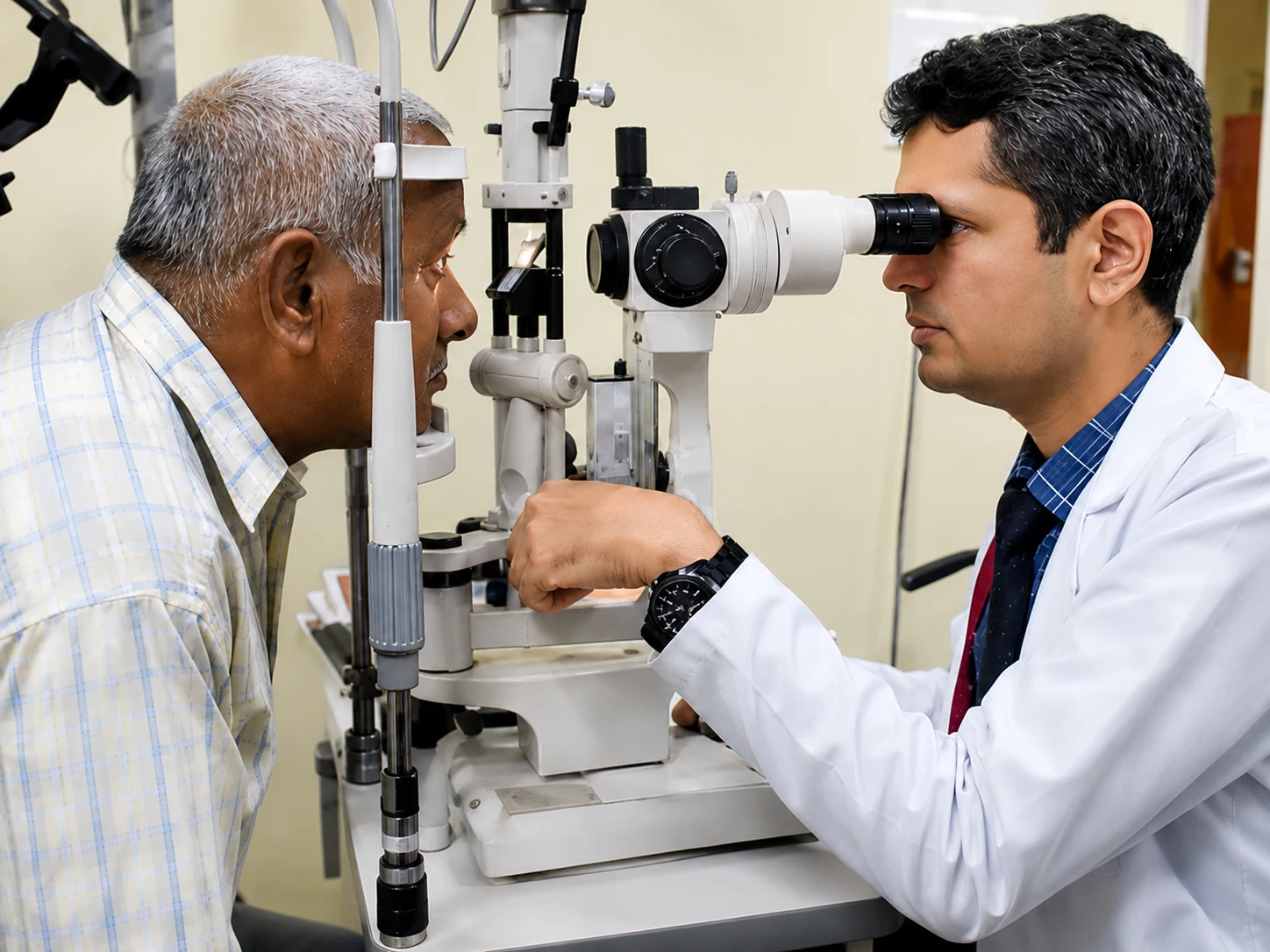
The goal is not only to reduce eye pressure, but also to monitor whether the optic nerve and visual field remain stable over time.
Review risk factors, symptoms, family history, previous pressure readings and current eye medicines.
Assess eye pressure, optic nerve, drainage angle and relevant imaging or visual-field findings.
Plan observation, eye drops, laser or surgical treatment according to glaucoma type and disease severity.
Repeat testing over time to check whether pressure control is adequate and progression is being limited.
Treatment suitability requires an in-person eye examination. Depending on the case, treatment may range from monitoring and eye drops to laser or surgery.
Pressure-lowering drops may be used alone or in combination and usually require regular monitoring.
Laser may be suitable in selected open-angle or angle-related glaucoma situations depending on clinical findings.
Minimally invasive glaucoma surgery may be considered for selected patients. SGVEH glaucoma services include techniques such as GATT, KDB and BANG where clinically appropriate.
More advanced surgery may be discussed when target pressure cannot be reached or disease continues to progress.
Glaucoma is a long-term disease, so useful testing is not only about a single result. Comparing pressure, optic nerve structure and visual function over time helps guide treatment decisions.
Short, patient-friendly answers to common questions people search before deciding on glaucoma evaluation.
Need personalised guidance? →Glaucoma evaluation is important if eye pressure is high, there is a family history of glaucoma, optic nerve changes are suspected, visual-field defects are present or long-term glaucoma follow-up has been advised.
Existing optic nerve damage is generally not reversible, but treatment can often slow or control further damage by lowering eye pressure and monitoring progression.
No. Some people have high pressure without optic nerve damage, while others can develop glaucoma at pressures that appear within a usual range. Diagnosis depends on the full clinical picture.
Assessment may include eye-pressure measurement, optic nerve examination, gonioscopy, visual-field testing, OCT and corneal-thickness measurement depending on the case.
Some patients need long-term medication, while others may be managed with laser or surgery depending on glaucoma type, pressure targets and response to treatment.
Surgery may be considered when eye pressure is not adequately controlled, the disease is progressing, medications are not tolerated or a surgical approach is otherwise clinically appropriate.
This page is educational and does not rank, certify or guarantee any doctor as objectively “best.” Glaucoma diagnosis and treatment suitability require an in-person eye examination and clinician assessment.
Our team can help guide you toward an appropriate SGVEH glaucoma evaluation and care pathway in Raipur based on your history and examination needs.